

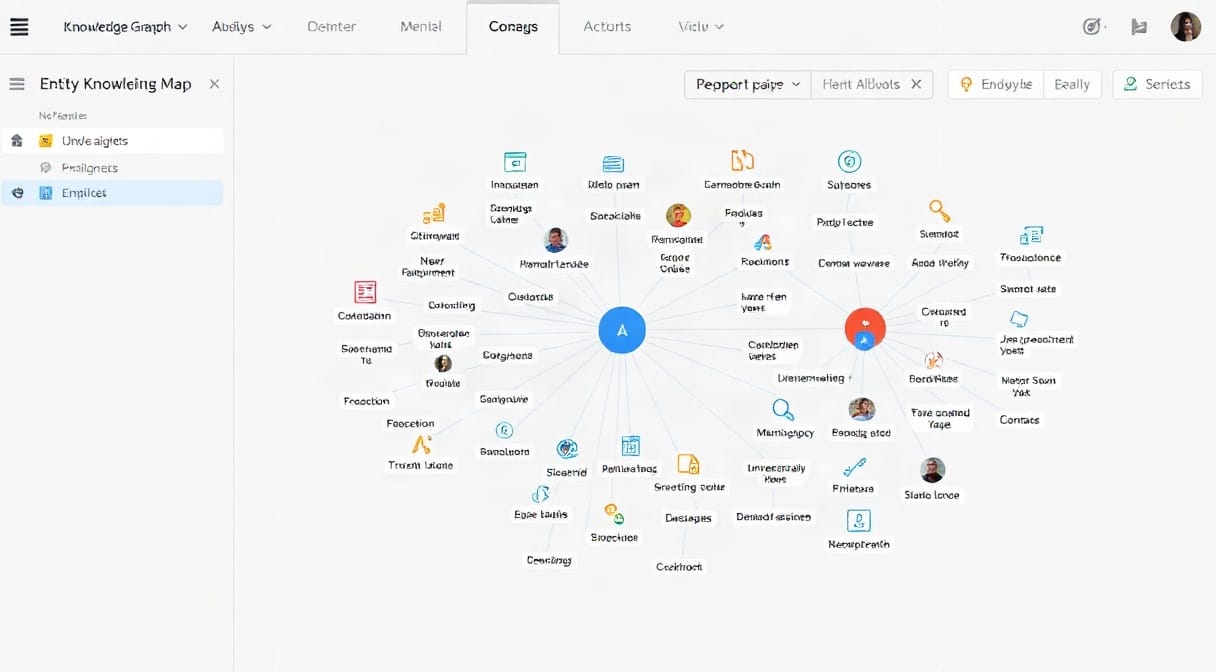
Search engines do more than match a query to a repeated phrase. They also interpret what a page is about, which real-world things it describes, and how those things relate. That makes entity seo optimization a useful way to plan content around people, places, products, organizations, concepts, and the connections among them—not just a list of target keywords.
This approach does not mean guessing at Google’s internal systems or adding schema to every page. It means making your expertise, subjects, and evidence clear to readers and machines. The following framework explains how to identify entities, map topics, connect pages, use structured data appropriately, and assess results without treating the Knowledge Graph as a ranking shortcut.
1. Build an entity seo optimization foundation
Start by defining what counts as an entity for your site. An entity is a distinct thing or concept that can be identified and distinguished from similar things. Depending on your business, it might be a named product, a service, a professional, a location, an industry standard, or a process. A keyword is a wording people search; an entity is the subject that wording refers to. One entity can be described by many queries, and a single query can refer to different entities in different contexts.
For example, a local outdoor retailer might publish around the entity Mount Rainier, the entity Rainier hiking permits, and the concept of alpine safety. Search phrases such as permit requirements, trail access, or climbing season may all relate to one of those subjects. Planning only around separate phrases risks producing disconnected pages that repeat basic facts. An entity-centered plan asks what the reader needs to know about each subject and which relationships make the information useful.
Choose entities that match your expertise
Create an initial inventory from your products, services, customer questions, support documentation, sales conversations, and existing content. Use a spreadsheet or database with fields for entity name, entity type, preferred wording, alternate names, authoritative source, associated topics, and existing URLs. Add a short explanation of why each entity belongs on your site. This last field helps prevent a broad keyword list from turning into an unfocused content plan.
Then prioritize entities based on audience value and your ability to provide first-hand, accurate information. A medical publisher may be qualified to explain a condition and its care pathways, while a software vendor may be best positioned to explain its own integrations and workflows. Do not imply a relationship, credential, or product feature that you cannot substantiate. Clarity about scope is part of useful entity coverage.
Disambiguate names and meanings
Names are often ambiguous. A brand may share its name with a city, a person may have a common surname, and an acronym may describe several concepts. Give the subject enough context to distinguish it: identify an organization by its industry and location, explain what a product does, and use a person’s role when relevant. Keep names consistent across the site, but use natural variations when they help readers understand the subject.
Search results, official websites, reputable reference sources, and customer language can help validate which meaning is relevant. A tool such as Google Cloud Natural Language entity analysis can surface entities it recognizes in a sample text, along with entity types and salience signals. Treat that output as a diagnostic, not a definitive answer: automated extraction can miss context, confuse names, or overvalue a prominent phrase. A human editor should verify every important identification.
Record confidence and evidence in your inventory. If a connection is uncertain, mark it for review instead of presenting it as fact. This simple quality-control step is valuable when several writers contribute to a site, and it gives the team a shared reference before new pages are drafted.
A strong entity seo optimization foundation therefore combines a clear vocabulary with editorial judgment. It gives writers a shared way to name subjects, distinguish similar concepts, and explain why those subjects matter to the audience.
2. Map topics and relationships, not isolated terms
Once your entity inventory is reliable, map the topics that readers need in order to understand each entity. A useful map includes both subjects and relationships: a product is made by an organization, a treatment may be used for a condition, or a destination has access rules. The relationship is not a decorative line between two labels. It should be a meaningful, supportable statement that helps explain the subject.
This is where an entity based content strategy becomes more useful than a flat keyword export. A keyword tool may show search demand and related queries, but it does not automatically tell you whether two phrases belong on one page, whether a topic deserves a dedicated guide, or whether your site has enough evidence to cover it. Use query data as audience language and demand research; use the entity map to decide how information should fit together.
Create a practical topic graph
Build the map in a spreadsheet, mind-mapping application, or graph visualization tool. Start with one central entity, then add its attributes, related entities, questions, and supporting sources. For a running shoe, the map might include manufacturer, model, intended terrain, fit guidance, materials, care instructions, and comparisons with other models. Each branch should represent an editorially useful relationship, not merely a phrase that happens to appear in a keyword report.
Add a relationship label to each connection, such as manufactures, located in, requires, supports, or compared with. Record the source that verifies the relationship and the page that explains it. A graph becomes actionable when the team can answer three questions: what does the connection mean, why would a reader care, and where should the explanation live? If one of these answers is missing, the map is not ready to drive publication.
Cluster by reader task and search intent
Group related questions according to the task a visitor is trying to complete. A person researching a product may need an overview, compatibility details, setup instructions, and troubleshooting. Those subjects connect, but they may require separate pages because their audiences and intent differ. Conversely, several closely related attributes may belong in one comprehensive page when separating them would create thin, repetitive content.
Use search result inspection and your own customer research to make this call. Compare the types of pages that appear for different queries, then check whether your audience expects an explanation, comparison, local detail, or step-by-step instruction. A resource on search intent optimization can help align page format with the job behind a query. Search intent is evidence about page design, not proof that every similar phrase should be consolidated.
Document the planned page purpose, primary entity, supporting entities, reader questions, unique evidence, and internal links before drafting. A structured SEO content brief template can make that handoff repeatable. Include a note on what the page will not cover, especially when nearby pages address related but distinct topics.
Topic maps should evolve as products, services, and audience needs change. Review them when you launch an offer, update a policy, or find an unanswered recurring question. An effective entity based content strategy prioritizes coherent coverage and useful relationships over publishing a page for every possible variation.
3. Design pages that make entities and evidence clear
A topic map guides the site, but each page still needs to work on its own. State the central subject early, explain why it matters, and define specialized terms before relying on them. Readers should not need to infer whether a page describes a company, a product line, a technical method, or a general concept. Search engines benefit from the same explicit context, although no wording formula guarantees a particular interpretation or ranking.
For entity seo optimization, aim for precise coverage rather than repeated entity names. Explain the subject’s relevant attributes, its relationship to other subjects, and the boundaries of what you know. If a page discusses a software integration, for instance, specify which products connect, what data moves, what setup is required, and any known limitations. Those details are more informative than inserting the product name into every heading.
Use a repeatable page brief
For each planned URL, give the writer a compact specification. Include the primary entity and its type, the intended reader, the question the page answers, key related entities, facts that need verification, and links to authoritative sources. Add the page’s role in the site: is it the main guide, a supporting explanation, a comparison, or a transactional page? That role helps prevent two URLs from competing to serve the same purpose.
Ask writers to distinguish facts from interpretation. Attribute claims to named sources when appropriate, show the date or version of information when it affects accuracy, and identify uncertainty instead of disguising it. In fields where advice can affect health, finances, safety, or legal decisions, use qualified review and clear limits. These editorial practices do not exist solely for algorithms; they protect readers and strengthen the reliability of the whole site.
Before publication, compare the draft with the entity map. Confirm that each important relationship is explained in ordinary language, each claim has suitable support, and the page links to the next useful resource. If the draft introduces a new entity, update the inventory. If it repeats an existing page without adding a distinct audience benefit, revise the scope or combine the material where appropriate.
Make page relationships navigable
Internal links help people move between connected topics and give search systems discoverable paths through a site. Use descriptive anchors that say what the destination covers, rather than generic instructions. A parent guide might link to a detailed setup page, while the setup page links back to the broader product overview. Add links only when they genuinely help the reader; a large block of unrelated cross-links weakens the map.
Information architecture can reinforce the topic relationships. Organize navigation and categories around meaningful subject areas, use breadcrumbs where they clarify location, and ensure important pages are reachable through normal links. A deliberate SEO silo structure may help teams organize related resources, but a rigid silo should not prevent relevant connections across categories. The reader’s task is more important than a diagram that looks tidy.
Review technical access as part of the editorial process. A carefully written page cannot help users if it is blocked, orphaned, or rendered without its main content. Check crawlability, indexability, canonical settings, and rendered output before treating weak visibility as a content problem. These checks keep entity seo optimization connected to the practical realities of publishing and discovery.
Finally, read the page as a newcomer. Can someone identify the subject, understand its connection to related topics, and find the evidence or next step? If not, clarify the explanation before adding more keyword variations.
4. Use structured data carefully for google knowledge graph optimization
Structured data can describe certain information on a page in a machine-readable format. It is useful when the markup accurately represents visible content and follows the relevant search engine guidance. It does not turn a page into a Knowledge Graph result by itself, guarantee a rich result, or replace clear writing. Treat google knowledge graph optimization as a goal of making entity information consistent and understandable, not as a promise to control Google’s database.
Google’s documentation explains how structured data works and why eligible markup must reflect the page. Review the Google Search Central introduction to structured data before implementation. For vocabulary and property definitions, consult the relevant type on Schema.org’s Organization reference. Choose types that match the page rather than selecting markup because it appears more powerful.
Markup should support visible facts
On an organization page, appropriate structured data may describe information such as the organization’s name, official URL, and other supported properties. On a product page, use only properties that match the actual product and visible page content. Do not add hidden reviews, invented ratings, unrelated entities, or claims that the reader cannot verify. When a page covers multiple subjects, distinguish the main subject from incidental mentions instead of marking every noun as equally important.
Use a stable identifier when a suitable one exists, and maintain consistency across pages. For example, if your site identifies the same organization on its about page and contact page, avoid conflicting names or URLs. Schema markup is one component of the information environment; consistent branding, accurate business details, and trustworthy external references also contribute to a clear identity. None of these elements guarantees inclusion in a particular Google feature.
Validate, monitor, and maintain markup
Use a structured data testing tool to identify syntax problems and inspect what the markup communicates. Then verify that the rendered page contains the information represented in the code. A valid test result only confirms that a tool can parse the markup or recognize certain eligibility conditions; it does not certify factual accuracy or guarantee a search appearance. Keep a record of who owns the implementation and what source supports each property.
After a site redesign, template change, or major content update, test key page types again. Markup can become stale when a product is discontinued, a business detail changes, or a template begins emitting duplicate entities. Establish a review process with the people responsible for editorial and technical updates. This prevents metadata from quietly contradicting the page that readers actually see.
Google’s Knowledge Graph is a Google system for organizing information about entities and their relationships. Publishers cannot directly edit it through a content tactic, and entity markup should not be represented as an application form. You can, however, make your own site’s identity and claims easier to understand, provide consistent factual information, and earn references from reliable sources. That is a realistic foundation for google knowledge graph optimization without overstating what a publisher controls.
Consider structured data after the page and its visible content are sound. If the page is unclear, the markup merely encodes that confusion. If the content is accurate and the type is appropriate, markup can give machines a more explicit description of information already available to people.
5. Measure entity seo optimization with useful signals
Entity-focused publishing can be difficult to evaluate if the team expects one metric to prove that a page has been understood as an entity. Search platforms do not expose a complete view of their internal entity interpretation. Instead, evaluate the work through a set of observable signals: whether important pages are crawled and indexed, whether relevant queries lead to those pages, whether readers use the internal paths, and whether the content answers real customer questions.
Before making changes, record a baseline for the URLs and topics involved. In Google Search Console, inspect performance by page and query, including impressions, clicks, click-through rate, and average position. Compare related query groups over an appropriate period, but account for seasonality, site changes, and demand shifts. Search Console reports can show patterns in visibility; they do not reveal the exact entity model Google uses or prove that a particular content edit caused a change.
Choose measures tied to the page’s job
For an informational guide, useful checks may include impressions across relevant question types, entrances from search, engagement with linked supporting pages, and feedback from support teams about recurring confusion. For a product page, review qualified organic visits, interactions with essential product details, and conversions where analytics consent and measurement practices permit. For local information, check whether location details are consistent and whether the page helps visitors complete the intended task.
Pair quantitative data with a small qualitative review. Ask readers or subject-matter colleagues to identify the page’s main subject, explain its relationship to other topics, and point out missing evidence. If different readers misunderstand the same connection, the page may need clearer definitions or stronger sourcing. This feedback can reveal problems that traffic totals alone will not show.
Use an improvement cycle, not a one-off launch
Prioritize gaps based on impact, confidence, and effort. A missing answer to a high-value customer question may deserve more attention than a speculative opportunity to add another markup type. Update the page purpose, add verified evidence, improve internal links, and document what changed. Avoid changing titles, headings, content, schema, and navigation all at once if you want to learn which intervention was associated with a result.
Revisit the map on a scheduled basis. Look for pages with overlapping purposes, important entities with no useful coverage, unsupported relationships, and old claims that need review. The right response might be to refresh a page, consolidate overlapping resources, add a new supporting guide, or remove material that no longer helps. A disciplined entity seo optimization program is not a demand to publish endlessly; it is a way to keep the site coherent as knowledge and user needs change.
One common failure is treating every entity mention as a content opportunity. This creates many thin pages, burdens maintenance, and can obscure the best resource. Another is assuming that a rise in branded searches proves Knowledge Graph inclusion. Branded demand can change for many reasons, so interpret it alongside other evidence and avoid causal claims that the data cannot support.
Close the loop by recording the hypothesis, the change, the review date, and the result. For instance: a support team reports recurring setup confusion; the guide adds a verified compatibility table and links to troubleshooting; the team later checks search queries and support feedback. This makes an entity based content strategy accountable to users instead of to a vague goal of appearing more semantic.
FAQ
What is entity seo optimization?
It is an approach to planning and improving content around identifiable subjects and the meaningful relationships among them. It complements keyword research by clarifying what pages should explain, how topics connect, and which claims need evidence. It does not guarantee rankings or Knowledge Graph inclusion.
How is entity-based content different from keyword-focused content?
Keyword research captures the language and demand behind searches. Entity-focused planning adds context: which real-world subject a query refers to, what a reader needs to know about it, and how it relates to other subjects. Strong editorial planning uses both rather than discarding keyword data.
Does structured data put a brand in Google’s Knowledge Graph?
No. Structured data can describe information on a page when it is accurate and eligible, but it does not directly submit or guarantee an entity in Google’s Knowledge Graph. Keep visible facts consistent, follow Google’s guidance, and avoid promising a specific search feature.
Which tool should I use to map entities and relationships?
Begin with a spreadsheet if the inventory is small; it is easy to filter entities, URLs, evidence, and owners. A mind map or graph tool can help when many relationships need visual review. The best tool is one your team can maintain and verify, not the one with the most elaborate diagram.
Conclusion: make your content relationships clear
Useful entity-focused content begins with subjects your organization can explain, connects them through verifiable relationships, and gives each page a clear job. Build an inventory, map reader needs, write with evidence, use structured data only when appropriate, and measure outcomes with realistic expectations. This practical form of entity seo optimization helps create a site that is easier to navigate and more coherent for both people and search systems.
Start with one important topic cluster, document its entities and gaps, and improve the page that will help readers most. For more guidance on building an effective organic search program, explore GlobalSEOFlow.com.